Romanian Customer Runs a Wood Block Making Machine Line
A pallet block line only proves itself after years of running. In late October 2026 our customer success manager and account manager visited a long term customer in Romania to see exactly that. The plant has run PalletMach equipment for 8 years and still turns out pallet blocks every working day.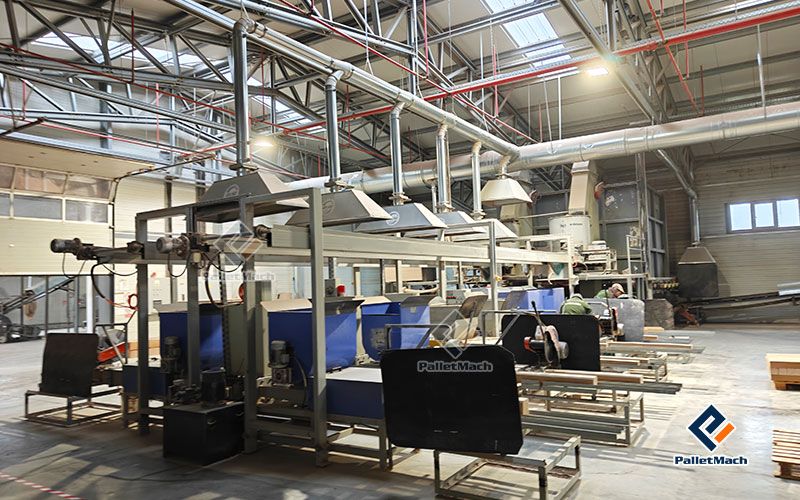
This review shares the machine setup we confirmed on site and the output the customer reported. It also names one honest bottleneck. If you are planning a wood block making machine line of the same type, treat it as a working checklist.
Why This Romanian Customer Chose a Block Line
The customer needed standard pallet blocks in a stable supply. Buying blocks from outside plants left lead time and quality in someone else hands. A block line on site settled both problems. It also gave the plant a paying use for wood waste that would otherwise be sold cheap.
Equipment on the Pallet Block Production Line
he line runs a full sequence rather than one machine. The setup below is what we confirmed during the visit.
Crushing and Drying Section
Two comprehensive crushers handle the incoming waste. One is a 1500 model and the other is an 800 model. Both belong to the wood crushing machine family that prepares fibre for block forming. A dryer roughly 12 metres long lowers moisture before forming. still need confirmation from the plant.
Forming and Cutting Section
The wood pallet block machine forms a continuous block profile from dried sawdust and glue. A cutting station then splits it into fixed lengths. Feeding runs on a chain conveyor rather than an air system, which keeps the feed rate on the slower side.
From Used Pallets to Fine Sawdust
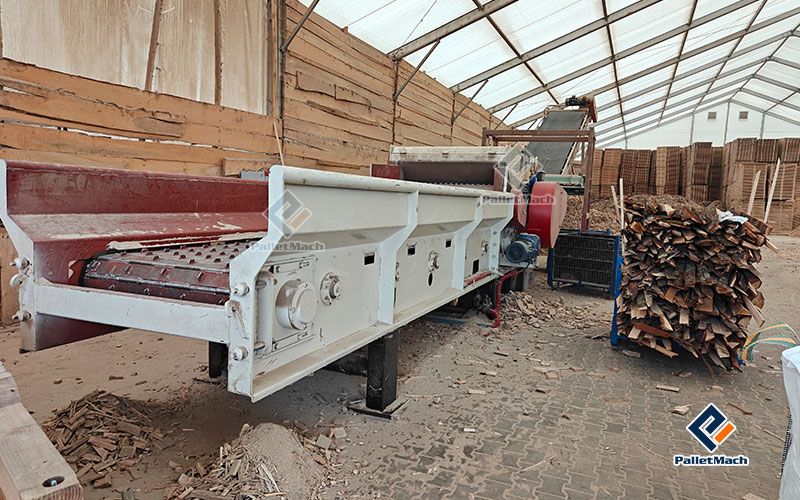
The crushers accept mixed waste. Used pallets, wood offcuts and slab ends all go in. A wood crusher takes that bulky scrap down to a manageable size in one pass. A wood waste block machine line depends on this stage, because the plant has to handle whatever arrives that week.
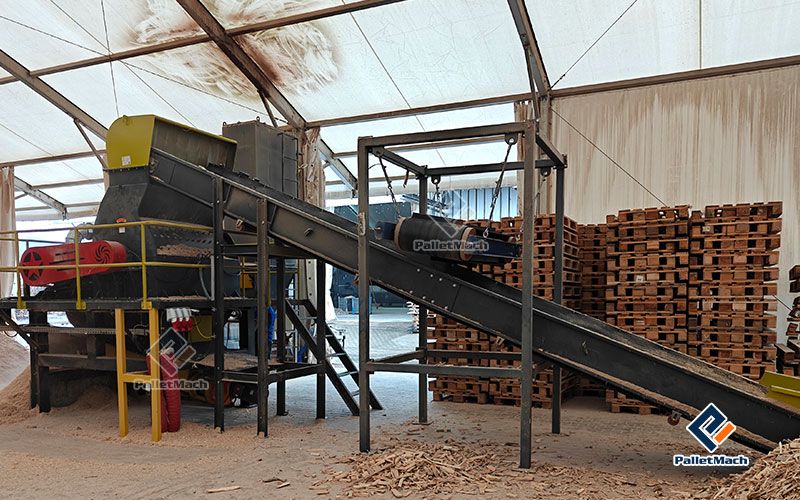
A pulverizer then works the pieces down into fine sawdust. Particle size matters at this point. Coarse fibre leaves weak spots in a finished block. Material that is too fine can slow drying and upset the glue mix.
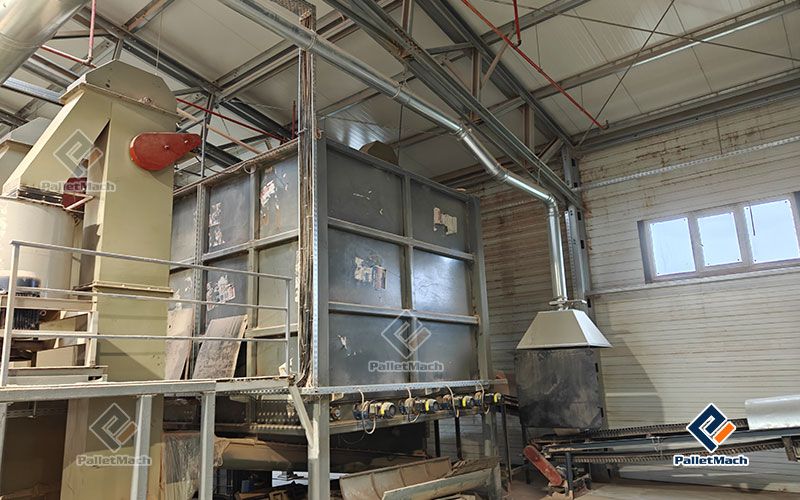
Moisture is the other half of the story. Sawdust that is too wet will not cure properly. Sawdust that is too dry will not hold glue well. The dryer brings the material into a workable window before it reaches the sawdust block machine.
How Pallet Blocks Are Formed and Cut to Length
Dried sawdust moves to mixing, where glue is blended through it. The blend enters the machine and forms under heat and pressure. Buyers often search for a hot press wood pallet block making machine at this stage, and that is exactly the principle at work here.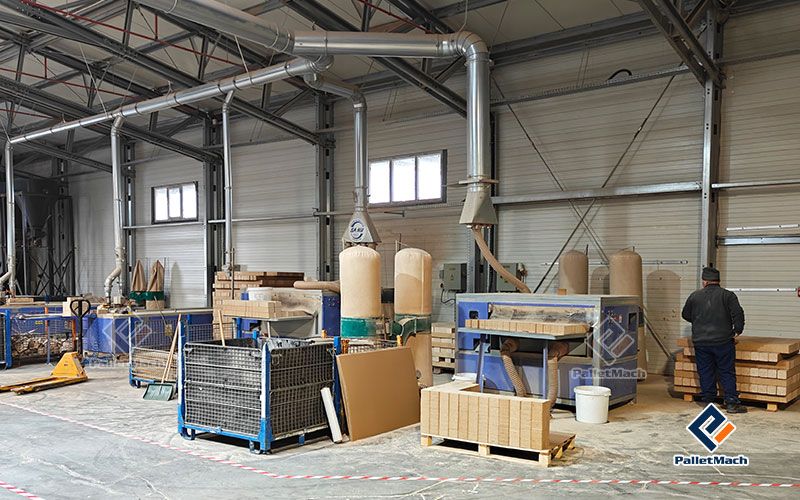
The pallet block cutting machine trims the profile to the ordered length. Cutting accuracy decides how the block sits in a pallet corner. A square cut keeps the block flush with the stringer. That is why cutting belongs on the same line rather than at a manual bench. PalletMach supplies this stage as a multiple blade pallet block cutting machine for plants that need several lengths from one pass.
Real Output From an Eight Hour Shift
The customer shared production records for blocks in the 95 x 95 【mm】 size. Under an eight hour shift the line produced about 1,615 pieces. Those figures come from the customer own operating data.
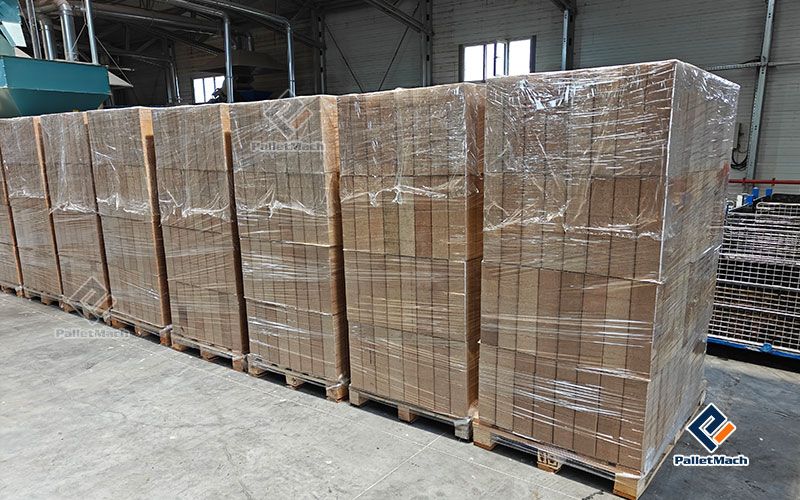
Actual output moves with several factors. Raw material type and moisture come first. Drying capacity, feed speed, glue mix and mould size follow. Shift length and downtime decide the rest.
The number above is customer reported data for one block size and one shift pattern. It is not a universal capacity promise for every project.
The Drying Bottleneck After Line Expansion
This was the most useful part of the visit. The customer added machines over the years but did not upgrade the dryer at the same pace. Crushing capacity grew and forming capacity grew. Drying stayed where it was.
Today the dryer covers about 80 percent of the plant own demand. The remaining 20 percent has to be bought in or handled another way.
The lesson generalises well. A block line should be upgraded as a complete system. Crushing, drying, feeding, mixing, forming and cutting all have to move together. Adding one fast machine to a slow line simply relocates the bottleneck. Sizing the drying machine against block output is the first calculation we run on any expansion.
Euro Pallet Blocks in Several Standard Sizes
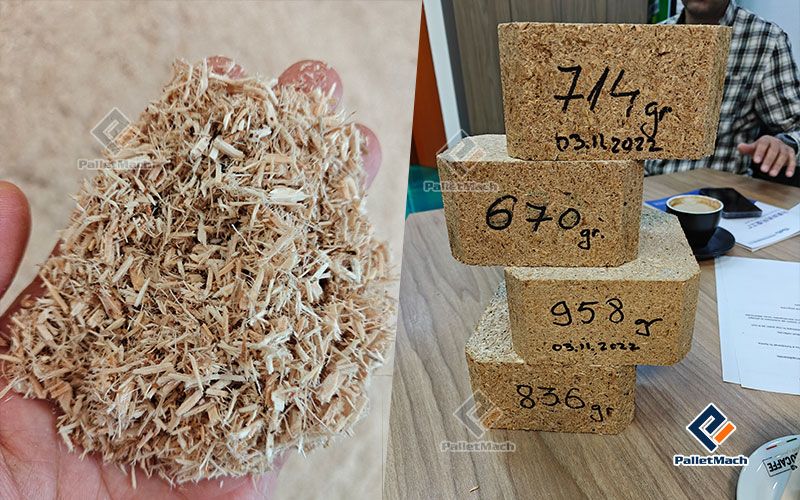
The plant produces blocks for euro pallets alongside other formats. Standard sizes ship in volume and non standard sizes run on request. The same compressed wood block making machine handles both by changing the mould and the cut length.
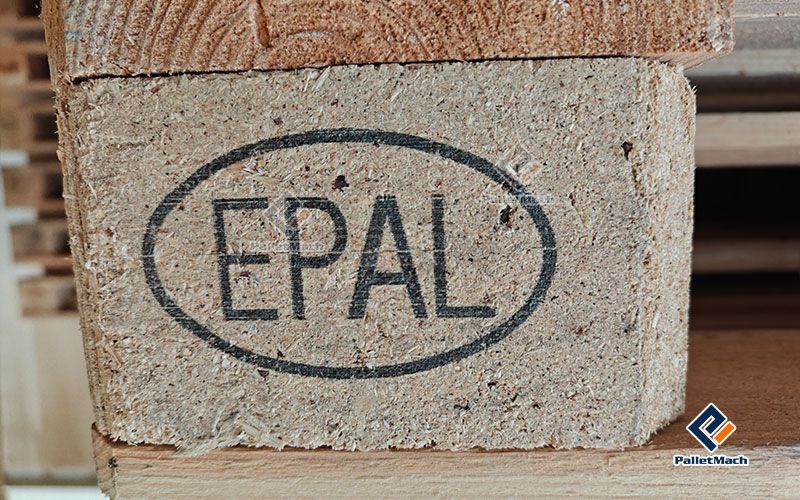
A block does its real work in the pallet corner. It carries the load path between deck and stringer and absorbs repeated forklift handling. Density and squareness therefore matter more than surface finish.
A Factory That Welcomes Visitor Inspection
The customer is willing to invite nearby buyers to watch the line run. For a purchaser a working plant beats any brochure. You can hear the crusher, watch the cutting station and count the finished stacks yourself.
The business has also grown beyond blocks. The customer runs pallet and packaging operations, a farm, a botanical garden and a mineral water line. The pallet feet block machine line supports that wider group, although it did not create all of it.
Site visits depend on customer approval, so we arrange them rather than the factory. Send your company name, block size and preferred dates to [email protected] or WhatsApp +86 15038248900, and we will confirm availability with the customer.
How to Plan Your Own Pallet Block Line
Raw Material and Moisture
Write down what you actually have. Used pallets, offcuts, shavings and sawdust all behave differently. Measure moisture before you size the dryer.
Target Size and Daily Output
Fix the block cross section and length first. Then set the daily piece count and the shift pattern. Those three numbers drive every machine choice that follows.
Line Balance and Future Expansion
Check that drying matches forming. Ask whether feeding can keep up with both. Leave room for a second shift before you place the order, whether you are comparing a sawdust block making machine or a full wood sawdust block making machine line.
Talk to PalletMach About Your Block Project
Send your raw material photos, moisture reading, target block size, daily output and shift plan. Add your factory floor dimensions and target market. Our engineers will return a line layout with a matched machine list, so the dryer and crusher are sized for the block machine rather than guessed.
Start from the pallet block machine hub for models and mould options. If you are still weighing suppliers, our guide to selecting a pallet manufacturer lists the questions worth asking. Factory background and delivery records sit on the PalletMach strength page.
Products
-
 Wood Pallet Machine
-
 Plastic Pallet Machine
-
 Pallet Block Machine
-
 Auxiliary Equipment